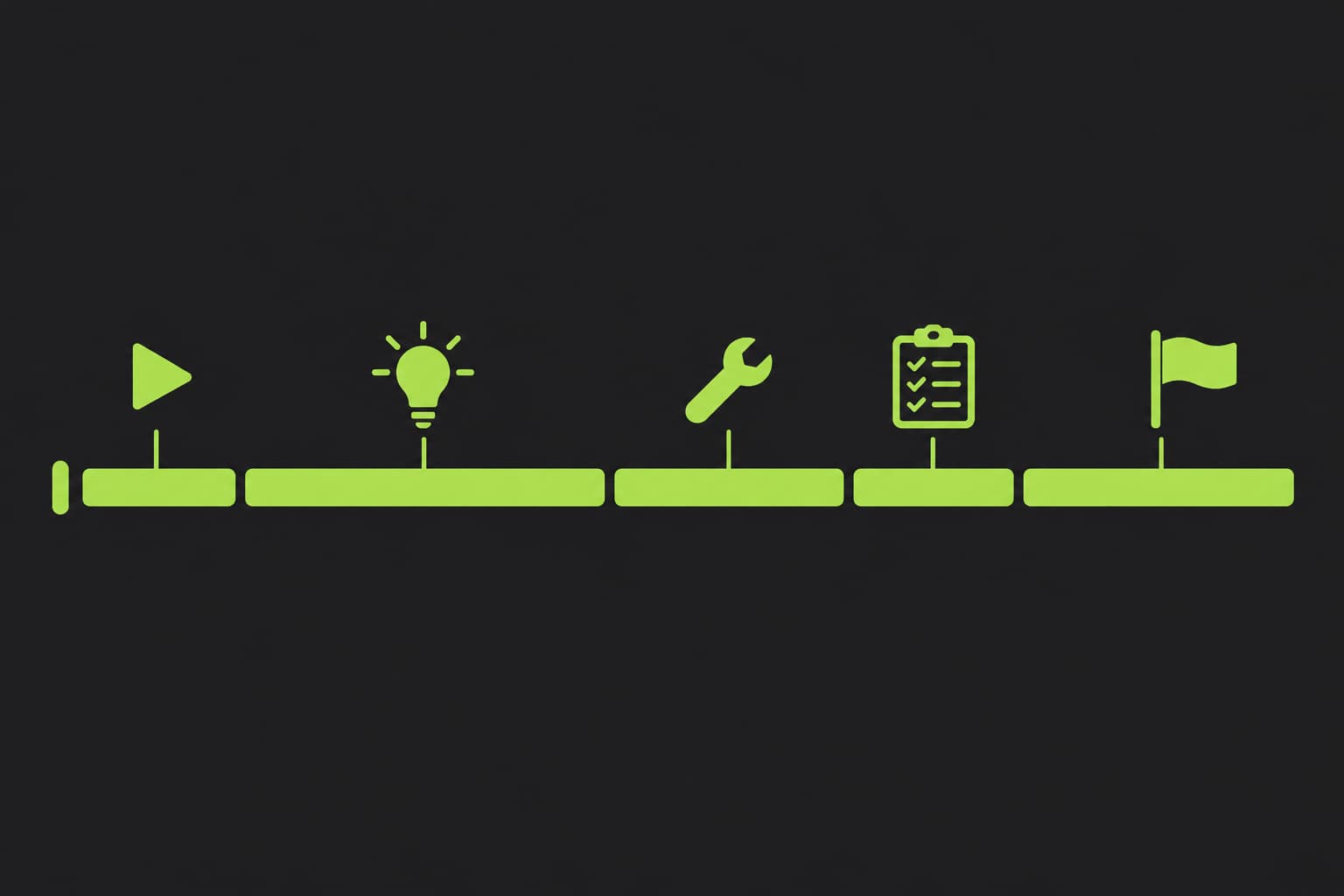
In shortA personal brand video strategy that lasts is built on three or four repeatable formats, one recording session per week and a cadence you can hold for at least 90 days. Consistency comes from reducing decisions, not from more motivation. Review what worked once a month and keep the two formats that earn the most attention and trust.
- Choose 3-4 formats and repeat them; new formats every week is the most common reason people stop.
- Pick a cadence you can keep for 90 days, then raise it only if it still feels easy.
- Record in batches: one session can feed a full week of short and long videos.
- Editing is usually the bottleneck; decide early whether you edit, use an app, hire a freelancer or use a done-for-you service.
- Review monthly and keep the two formats that bring the right viewers, not just the most views.
What a personal brand video strategy actually is
A personal brand video strategy is a written plan for who you talk to, what you talk about, which video formats you repeat, how often you post and how you will get each video edited. It is not a list of viral ideas. It is a system you can run on a busy week without thinking hard.
The angle in this guide is consistency and formats, because that is where most people break. Coaches, founders, consultants and local business owners usually know their subject. What they lack is a repeatable shape for their videos and a schedule that survives client work. If you run a company, our guide to founder-led video content covers the business side; this post covers the weekly mechanics.
A good plan answers five questions in one page: who is the viewer, what three to five topics you own, which formats you repeat, what cadence you can hold, and who edits. If any answer is "I'll figure it out each week", that is the part that will fail first.
Why personal brand videos stall: the real causes
When founders talk openly about building a personal brand, for example in a long Product Hunt discussion on how much time they spend on it, the same complaints repeat: daily posting quietly grows from half an hour to a few hours, early posts get very little engagement, and every hour on content is an hour away from the product. Burnout guides for YouTubers describe the same pattern from the creator side: dreading production and running out of ideas are the early warning signs.
Editing is only one of the causes. When a personal brand video strategy stalls, it is usually one of these:
- Format drift: every video is a different style, so nothing gets faster and viewers can't recognise you.
- Unclear audience: talking to everyone makes the message vague, so nobody feels the video is for them.
- Weak hooks: the first seconds don't say who it's for or what they get, so people scroll past.
- Unrealistic cadence: committing to daily posts, missing a week, then stopping completely.
- Editing backlog: footage is recorded but sits unedited, which kills the habit.
- Wrong platform fit: B2B audiences tend to sit on LinkedIn and YouTube, consumer audiences on Instagram and TikTok; posting the wrong format in the wrong place looks like failure.
- No offer link: videos get views but never point to a next step, so it feels pointless and motivation drops.
- Judging too early: reading the analytics daily and quitting before 30-40 posts are out.
How to diagnose which problem you have
Before you change anything, look at your last 10-20 videos and your calendar. The pattern tells you which fix to try first. Use the table below as a quick check.
| What you notice | Likely cause | First fix |
|---|---|---|
| Long gaps between posts, then bursts | Unrealistic cadence or editing backlog | Lower cadence; batch record; outsource editing |
| Views drop off in the first few seconds | Weak hook or vague topic | Open with who it's for and the result in one line |
| Decent views, no comments or DMs | Unclear audience or no call to action | Narrow the viewer; end with one specific next step |
| Each video takes hours to plan | Format drift | Lock 3-4 formats with fixed structures |
| Footage piles up on your phone | Editing is the bottleneck | Pick an editing route and a turnaround you can rely on |
| Good results on one platform, none on another | Platform fit | Put most effort where your buyers already are |
Fix one cause at a time for a month. Changing format, cadence and platform at once means you can't tell what worked.
Pick 3-4 formats for your personal brand video strategy
Formats are the backbone of a personal brand video strategy. A format is a repeatable structure: the same opening, the same length range and the same type of payoff. Once you have one, you don't start from a blank page; you only need a new topic. YouTube coach Salma Jafri suggests a useful source of topics: the questions your audience asks you most, or the questions people ask your competitors if you have no audience yet.
If you are hunting for personal branding video ideas, start from the formats below and pick three or four that match your goal and comfort on camera. You can add one later, but resist the urge to try a new style every week.
- For reach, lean on short form video for personal branding: quick answers and takes.
- For trust with buyers, add one longer format each week, such as a walkthrough or a story.
- For proof, collect results. If you work with clients, see our page on testimonial video editing for how those are usually cut.
- Coaches can borrow the format mix in our guide to video content for coaches.
| Format | Length | What it builds | Effort to make |
|---|---|---|---|
| Quick answer (one question, one answer) | 30-60 sec vertical | Reach and authority | Low: talk to camera |
| Story or lesson from your work | 60-90 sec vertical or 3-8 min | Trust and personality | Low to medium |
| Opinion or myth-busting take | 30-90 sec vertical | Memorability, comments | Low |
| Walkthrough or tutorial | 5-15 min horizontal | Search traffic, deep trust | Medium |
| Client or customer result | 1-3 min | Proof for buyers | Medium: needs permission |
| Behind the scenes | 15-60 sec | Familiarity | Low |
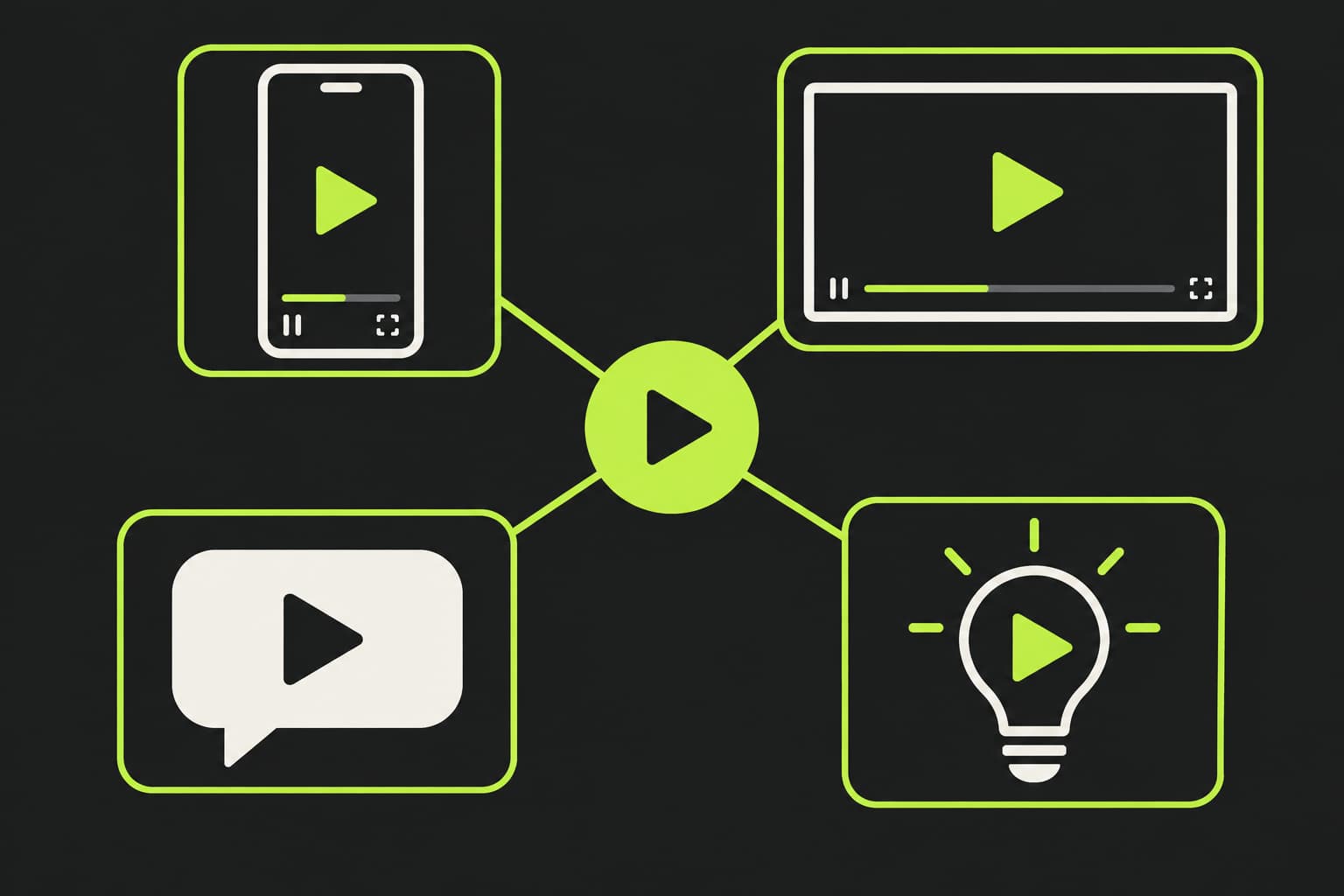
What CreatorSuite sends back
A real upload next to the finished edit. Switch between short form and long form.
Set a cadence you can keep (and when to raise it)
People ask how often to post videos for personal brand growth, and the honest answer is: as often as you can keep doing it for three months without skipping. A cadence you hold beats a cadence you announce, and it is the part of a personal brand video strategy that people most often overestimate. Salma Jafri's suggestion of a 90-day test, such as one video a week on the same day, is a good default because 12 videos is enough to learn from and small enough to finish.
A realistic starting point for a busy professional is one longer video and two to three short clips a week. Many of those short clips can come from the long one, so you are not recording four separate pieces. If you go live or record podcasts, our guide on how to clip livestreams shows how to pull short clips from long sessions.
Raise the cadence only when the current one feels easy for four weeks in a row. If you miss a week, don't double up the next week to catch up; just post the next planned video. Catch-up weeks are where burnout starts.
| Time you have per week | Suggested cadence | How to make it work |
|---|---|---|
| About 1 hour | 2 short videos | One 30-minute recording, editing outsourced |
| 2-3 hours | 1 long + 3 short | One recording session; shorts cut from the long video |
| 4+ hours | 1-2 long + 5 short | Batch record twice a month; keep a backlog of two weeks |
Step-by-step: one recording session feeds a week of personal brand videos
Here is a worked example. Imagine a business coach with about two hours a week for video. Her personal brand content calendar has three formats: a Tuesday walkthrough (8-10 minutes), and short quick-answer and opinion clips on Monday, Wednesday and Friday. This is batch filming for personal brand content, scaled down so it fits a real week.
Planning tools such as Planoly suggest the same order: count the slots in your calendar first, then fill each slot with a topic and a format, then pick filming days. The steps below follow that order.
- Step 1 (15 minutes, Sunday): write four topics, one per slot, from client questions she heard that week. Note the format next to each.
- Step 2 (5 minutes): write a one-line hook for each. For example: "If your discovery calls end with 'let me think about it', try this."
- Step 3 (45 minutes, Monday morning): record the long walkthrough in one take, plus three short answers back to back. Same outfit, same light, phone on a tripod.
- Step 4 (5 minutes): send all files to editing with notes: which clip is the Tuesday video, which three are shorts, and that the shorts need captions and a clear first line.
- Step 5 (when edits come back): check the cuts, add titles and descriptions, and schedule all four posts at once.
- Step 6 (10 minutes a day): reply to comments on posting days only. Keep a note of any question that could become next week's topic.
- Step 7 (end of month): review the numbers using the checklist in the review section below.
The whole week costs about 90 minutes of her time if she doesn't edit. If she edits herself, budget several more hours, which is exactly where most schedules break.
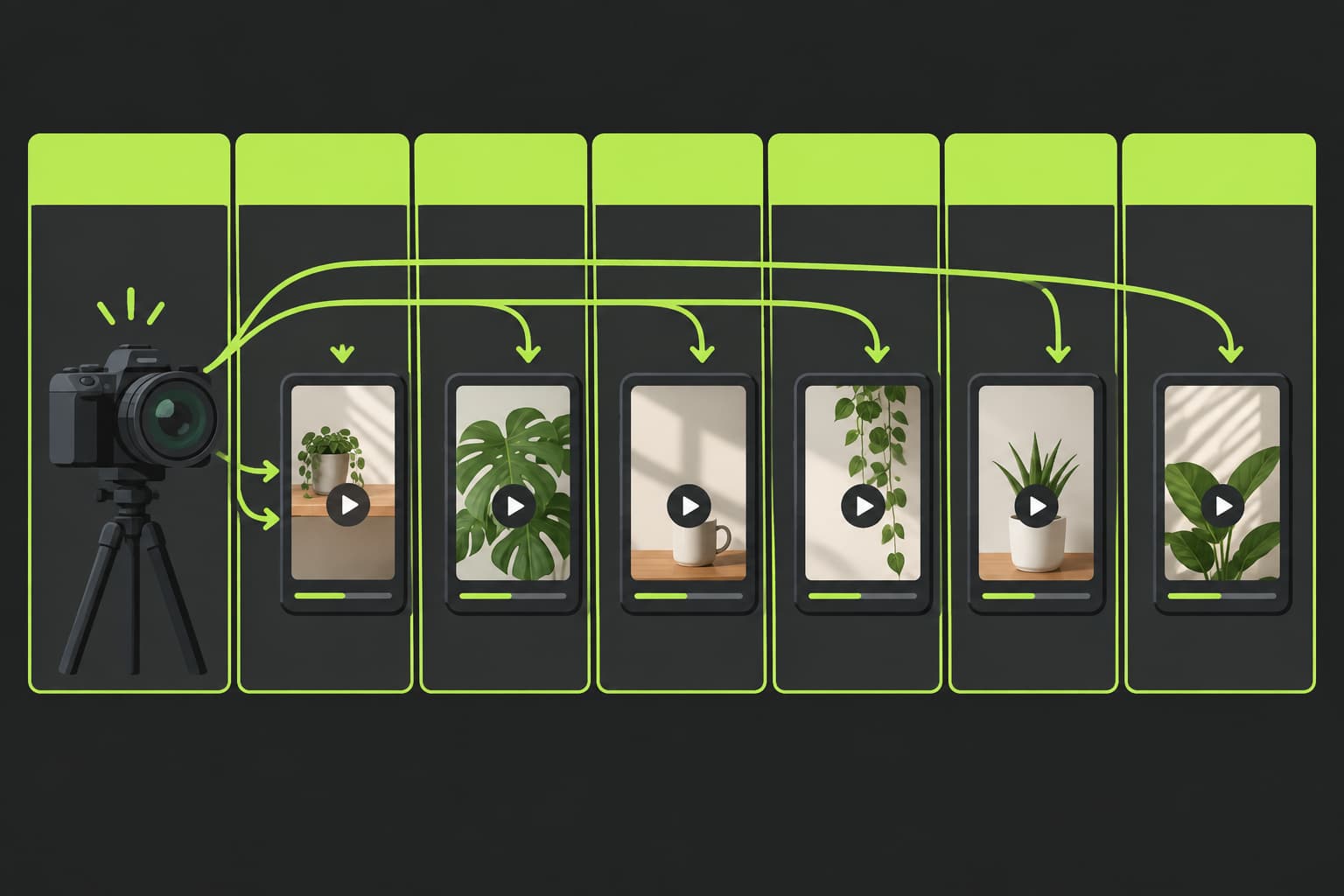
Editing options for a consistent personal brand video strategy
Recording in batches only helps if editing keeps up, so every personal brand video strategy needs a named editing route. There are a few realistic routes, and each has a fair use case.
Doing it yourself in a free or cheap app works if you enjoy editing and only post a few short videos a week. If you're picking an app, our comparison of Descript vs CapCut covers the trade-offs, and our YouTube Shorts editing tips cover the basics of captions, pacing and hooks. The cost is your time.
Hiring a freelancer gives you a person who learns your style, but you manage briefs, revisions and availability. Our page on an Upwork video editors alternative lays out what that usually involves. A full agency suits a brand that needs strategy, filming and editing together; see video editing agency pricing for how those costs are usually set.
A done-for-you service sits in between. CreatorSuite is an AI video editor run as a service: you upload raw footage (phone footage is fine), pick a style, and the AI edits it with cuts, a hook, captions, b-roll, motion design, sound and colour, then sends back a ready-to-post video. Plans start at $9/month, and the 3-day free trial covers 1 short video, 3 clips or 1 long video up to 10 minutes (card required). It edits footage you shoot; it does not film for you or make AI avatars, so if you need a crew or scripted production, an agency or local videographer fits better.
| Route | Best for | Trade-off |
|---|---|---|
| Edit it yourself | Few videos a week, you enjoy editing | Takes hours; the first thing to slip on busy weeks |
| Editing app with templates | Simple short clips | Still your time; templates can look samey |
| Freelance editor | A custom style and a long-term relationship | Briefing, revisions, availability |
| Agency | Strategy, filming and editing together | Highest cost and longest lead time |
| Done-for-you AI video editing service | Steady volume from raw footage | You still record; no filming or avatars |
Review your personal brand video strategy once a month
Checking analytics every day leads to quitting early. The vidIQ burnout guide recommends looking at numbers only at set times, and a monthly review is a good rhythm for a personal brand. Put it in your calendar on the last Friday of each month and spend 30 minutes on it.
You don't need a dashboard of benchmarks. Compare your own videos with each other and answer these questions:
- Which format kept people watching longest? In YouTube Studio, look at audience retention and where viewers drop off.
- Which videos brought comments, DMs, email replies or enquiries? Those matter more for a personal brand than raw views.
- Which topics did you enjoy recording? You will keep making those.
- Did you hit your cadence? If not, was the gap caused by ideas, recording or editing?
- Keep the two formats that did best on the goals above, swap out the weakest, and keep the cadence the same for another month.

Common mistakes that break consistency
Most of these are planning problems, not talent problems.
- Starting with daily posts. Start lower and earn the right to post more.
- Treating each video as a one-off. Without fixed formats, every week starts from zero.
- Copying other creators' formats that don't fit your audience or personality.
- Recording on the day you post. Keep at least a one-week buffer.
- Making every video about you. A personal brand grows when the viewer gets something useful; your story is the wrapper, not the point.
- Visual drift. vidIQ's branding advice is to keep thumbnails recognisable with the same fonts, colours and recurring imagery even when designs vary.
- Leaving out the next step. Every few videos should point to your offer, newsletter or booking link.
Where to start this week
Write your one-page video content plan for personal brand growth today: viewer, three to five topics, three or four formats, a cadence, and an editing route. Then book one recording session for this week and a review session at the end of the month. That is the whole system.
If you run a business, our guide to video marketing for small businesses shows how personal videos and company videos fit together, and founder story video editing covers the longer origin-story piece many founders make once.
If editing is what keeps breaking your schedule, CreatorSuite's AI video editing service is one option to test against your current setup: 2,700+ creators used it in the last 7 days, plans run from $9/month to $299/month, and you can try one edit on the 3-day free trial with a full refund before your 2nd edit. If you enjoy editing or need someone to film, one of the other routes will suit you better.
What we read for this guide
- How much time (as founders) do you spend on social media to build your personal brand? - Product Hunt · producthunt.comFounders report time creep, weak early engagement and the build-versus-brand trade-off.
- The YouTuber's Guide to Consistency Without Creative Burnout - vidIQ · vidiq.comSchedule ahead, reuse templates, check analytics at set times, watch for burnout signs.
- 7 Ways to Build Strong YouTube Branding - vidIQ · vidiq.comConsistent thumbnails, headshot and channel identity for personal brands.
- How to Build Your Brand on YouTube (Salma Jafri) - Social Media Examiner · socialmediaexaminer.com90-day format test, niche focus, and sourcing topics from audience questions.
- 5 Tips for Batch Filming - Planoly · planoly.comCount calendar slots, assign topics and formats, then batch film and schedule.
How this page was made: written by Badar Munir and the CreatorSuite team with AI assistance, reviewed by James, from facts we checked ourselves and the sources listed above. Spotted something out of date? Email us and we’ll fix it.
personal brand video strategy: FAQs
How often should I post videos for my personal brand?
Post as often as you can keep doing for 90 days without skipping. For most busy professionals that is one longer video and two or three short clips a week, with the short clips cut from the long one. Raise it only after four easy weeks.
What are good personal branding video ideas when I'm starting out?
Start with the questions clients or followers ask you most, lessons from recent work, opinions on common advice in your field, and short behind-the-scenes clips. Put each idea into one of three or four fixed formats so you are not inventing a new style every week.
Should I focus on short or long videos?
Use both if you can. Short form video for personal branding brings reach; longer walkthroughs and stories build trust and show up in search for longer. A simple mix is one long video a week plus a few shorts cut from it.
How do I stay consistent when I'm busy?
Batch record once a week, keep a one-week buffer, and remove editing from your own to-do list if it keeps slipping. Fix the cadence first and only add formats when the schedule feels easy.
Do I need professional equipment?
No. A phone on a tripod, a window or simple light, and a clip-on microphone are enough for most personal brand videos. Clear sound matters more than camera quality.
How long before a personal brand video strategy shows results?
There is no fixed timeline, and anyone promising one is guessing. Plan for a 90-day test, review monthly, and judge results by comments, enquiries and replies as well as views.
Rather not edit it yourself?
Upload raw footage, get a finished edit back. 3-day free trial: 1 short video, 3 clips or 1 long video up to 10 min.
2,700+ creators in the last 7 days
Start 3-day free trial